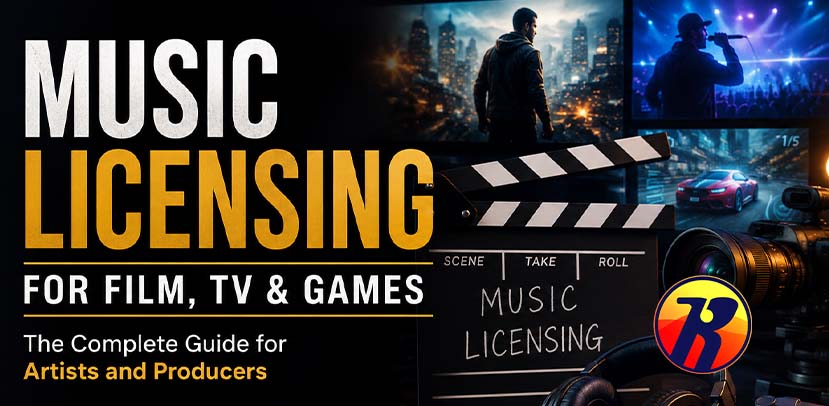
Music licensing for film, television, and video games has become one of the most profitable income streams for artists, producers, composers, and music publishers. Unlike streaming royalties, which often require millions of plays to generate substantial revenue, a single licensing deal can pay hundreds or even thousands of dollars upfront while also creating long-term royalty income.
With the rapid growth of streaming platforms like Netflix, Disney+, Amazon Prime Video, Hulu, YouTube, and the expanding gaming industry, the demand for high-quality music has never been higher. Independent musicians now have unprecedented opportunities to place their songs in movies, TV series, documentaries, advertisements, mobile games, console games, and trailers.
Whether you’re an independent artist looking to monetize your music or a filmmaker searching for the right soundtrack, understanding music licensing is essential.
What Is Music Licensing?
Music licensing is the legal process of obtaining permission to use copyrighted music in visual media or other projects. It allows creators to legally synchronize music with moving images or interactive content while ensuring the copyright owners are compensated.
Whenever music appears in:
- Movies
- Television shows
- Commercials
- Video games
- YouTube videos
- Podcasts
- Documentaries
- Mobile apps
- Corporate presentations
- Streaming content
the user generally needs permission from the copyright holders.
Without proper licensing, using copyrighted music may lead to copyright claims, legal disputes, content removal, demonetization, or financial penalties.
What Is Sync Licensing?
One of the most common forms of music licensing is synchronization licensing, commonly called a sync license.
A sync license grants permission to synchronize music with visual content.
Examples include:
- A romantic song playing during a movie scene
- Background music in a television commercial
- Theme music in a Netflix series
- Soundtracks inside a PlayStation or Xbox game
- Intro music for YouTube creators
- Promotional trailers
This license is usually negotiated before production is released.
Who Owns the Rights?
Most songs contain two separate copyrights.
1. Composition Copyright
This protects:
- Lyrics
- Melody
- Musical arrangement
Usually owned by:
- Songwriters
- Music publishers
2. Master Recording Copyright
This protects the recorded version of the song.
Usually owned by:
- Record labels
- Independent artists
- Producers
Anyone licensing music generally needs permission from both copyright owners.
If an artist owns both the publishing and master rights, licensing becomes much easier because only one approval is required.
Types of Music Licenses
Synchronization License
Allows music to be paired with video content.
Used for:
- Films
- Television
- Commercials
- Video games
- Documentaries
- Online videos
Master Use License
Allows use of the actual recorded version of the song.
Without this license, someone may need to re-record the song.
Mechanical License
Allows reproduction and distribution of musical compositions.
Often applies to:
- CDs
- Vinyl
- Digital downloads
Public Performance License
Required whenever music is publicly performed.
Examples include:
- TV broadcasts
- Radio
- Restaurants
- Concert venues
- Sports arenas
Performance royalties are usually collected by Performing Rights Organizations (PROs).
Print License
Allows reproduction of sheet music.
Theatrical License
Used for stage productions and theatrical performances.
How Music Licensing Works
The licensing process usually follows these steps.
Step 1: Music Selection
A music supervisor or producer searches for songs that fit the project.
Factors considered include:
- Mood
- Tempo
- Lyrics
- Genre
- Budget
- Audience
Step 2: Rights Clearance
The supervisor identifies who owns:
- Publishing rights
- Master rights
Step 3: Negotiation
Both parties negotiate:
- Licensing fee
- Usage period
- Territory
- Exclusivity
- Media rights
Step 4: Agreement
Contracts are signed by all copyright owners.
Step 5: Music Placement
The music appears in the project.
Step 6: Royalties
Depending on the agreement, artists may receive:
- Upfront licensing fees
- Performance royalties
- Backend royalties
- International royalties
Music Licensing for Film
Films often have larger budgets than independent productions, making them attractive opportunities for artists.
Music may be used in:
- Opening credits
- Emotional scenes
- Action sequences
- End credits
- Promotional trailers
Successful placements can significantly increase an artist’s exposure while generating long-term income.
Music Licensing for Television
Television offers recurring opportunities because songs may appear across multiple episodes and seasons.
Common placements include:
- Drama series
- Reality shows
- Sports broadcasts
- News features
- Lifestyle programs
- Talent competitions
A single TV placement can continue earning performance royalties every time the episode airs or streams.
Music Licensing for Video Games
The gaming industry is now one of the world’s largest entertainment sectors, creating enormous demand for music.
Games require music for:
- Main menus
- Gameplay
- Character introductions
- Boss battles
- Story sequences
- Downloadable content (DLC)
- Multiplayer modes
Developers often seek music that enhances player immersion while fitting the game’s style and pacing.
Why Game Developers Need Licensed Music
Proper licensing protects developers from copyright infringement while allowing them to distribute games globally across multiple platforms.
Licensed music also improves:
- Player engagement
- Brand identity
- Emotional storytelling
- Marketing campaigns
Benefits of Music Licensing for Artists
Licensing offers several advantages beyond streaming revenue.
Additional Income
Artists earn licensing fees that may exceed earnings from millions of streams.
Passive Revenue
Many licensed songs continue generating royalties for years after placement.
Global Exposure
Movies, TV shows, and games introduce music to audiences worldwide.
Increased Streaming
Successful sync placements often boost streams, downloads, and social media followers.
Career Opportunities
Licensing can lead to collaborations with directors, producers, brands, and advertising agencies.
Factors That Affect Licensing Fees
There is no universal price for music licensing.
Pricing depends on several factors.
Project Type
Major Hollywood films generally pay more than independent productions.
Distribution
Worldwide releases usually command higher fees than local projects.
Duration
Using an entire song costs more than a 15-second excerpt.
Exclusivity
Exclusive licenses are typically more expensive than non-exclusive agreements.
Artist Popularity
Well-known artists often command higher licensing fees.
Budget
Large studios usually have higher licensing budgets than independent creators.
Common Licensing Mistakes
Many independent artists miss licensing opportunities because they make avoidable mistakes.
Common errors include:
- Not owning master rights
- Failing to register songs properly
- Ignoring publishing rights
- Missing metadata
- Poor audio quality
- Unclear ownership splits
- Using uncleared samples
- Signing unfavorable contracts
How Independent Artists Can Get Music Placements
Independent musicians no longer need major record labels to secure sync opportunities.
Improve your chances by:
Build a Professional Catalog
Record high-quality music that is properly mixed and mastered.
Register Your Copyright
Protect both your compositions and master recordings before pitching them.
Register With a Performing Rights Organization
This ensures you receive performance royalties when your music is broadcast.
Create Instrumental Versions
Many productions prefer instrumentals because dialogue remains clear.
Maintain Accurate Metadata
Include:
- Song title
- Artist name
- BPM
- Genre
- Mood
- Contact information
- ISRC
- Writers
- Publishers
Network With Music Supervisors
Attend industry events and connect with professionals working in film, television, advertising, and gaming.
Submit to Licensing Libraries
Many production companies search music libraries before contacting artists directly.
Release Music Consistently
A larger catalog increases your chances of landing placements.
Tips for Producing Sync-Friendly Music
Music supervisors often look for songs that are easy to edit and emotionally impactful.
Consider these production tips:
- Start with a strong hook.
- Keep intros relatively short.
- Deliver clean, broadcast-quality recordings.
- Avoid excessive profanity unless appropriate.
- Create multiple versions, including instrumental, clean, and shortened edits.
- Organize your files with consistent naming and metadata.
- Ensure you can provide clear rights information quickly.
Understanding Music Licensing Agreements
Before signing any licensing contract, review key terms carefully.
Look for details about:
- Payment structure
- License duration
- Territory
- Media platforms
- Exclusivity
- Renewal options
- Credit requirements
- Termination clauses
- Royalty collection
- Ownership of rights
When possible, consult an entertainment lawyer or experienced music manager before agreeing to complex licensing terms.
Frequently Asked Questions
Can independent artists license music for Netflix or video games?
Yes. Many productions actively seek independent music, especially when artists own both their publishing and master rights.
Do I keep ownership after licensing my song?
In most cases, yes. A license grants permission to use your music under agreed terms but does not transfer ownership unless the contract specifically states otherwise.
Can one song be licensed multiple times?
Yes. Non-exclusive licenses allow the same song to be licensed to multiple projects, depending on the terms of each agreement.
Do I earn royalties after licensing my music?
Often, yes. In addition to an upfront sync fee, broadcasts and certain uses may generate ongoing performance royalties, depending on the territory, platform, and agreement.
Can I license cover songs?
Cover songs can be more complicated because they involve underlying composition rights. You typically need permission from the copyright owner of the composition, and your recording rights alone are not enough for most sync uses.
Final Thoughts
Music licensing for film, television, and video games is one of the most rewarding areas of the modern music business. It offers artists the opportunity to generate substantial income, build global exposure, and establish long-term relationships with filmmakers, game developers, advertising agencies, and production companies.
For independent musicians, owning both the publishing and master rights, maintaining a well-organized music catalog, and understanding licensing agreements can dramatically improve the chances of securing valuable sync placements. As the demand for original music continues to grow across streaming platforms and interactive entertainment, artists who prepare their catalogs professionally and market their music strategically will be well positioned to benefit from this expanding industry.


This is educative thanks for the article