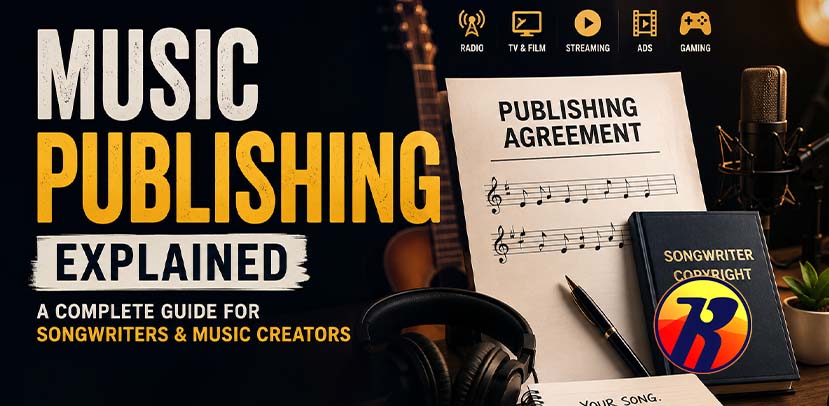
Music publishing is one of the most misunderstood aspects of the music industry. While many artists focus on streaming royalties, concerts, and merchandise, music publishing often becomes the largest long-term source of income for successful songwriters.
Whether you are an independent artist, songwriter, producer, composer, or music entrepreneur, understanding music publishing can significantly increase your earnings and protect your creative work.
In this complete guide, you’ll learn everything about music publishing, how it works, the different royalty types, publishing deals, copyright ownership, and how to start earning from your songs worldwide.
What Is Music Publishing?
Music publishing is the business of managing, protecting, licensing, and monetizing musical compositions.
A musical composition refers to the lyrics and melody of a song—not the recorded version.
Every song consists of two separate copyrights:
Composition Copyright
This protects the lyrics, melody, and musical arrangement created by the songwriter or composer.
Sound Recording Copyright
This protects the actual recorded performance of the song, usually owned by the artist or record label.
Music publishing only deals with the composition copyright.
For example, if ten different artists record the same song, each recording has a separate sound recording copyright, but they all use the same underlying composition.
Why Music Publishing Matters
Many musicians lose thousands of dollars every year because they fail to register their publishing rights.
Music publishing helps creators:
- Collect royalties worldwide
- Protect ownership of songs
- License music for TV, movies, commercials, and games
- Earn income even decades after release
- Prevent copyright infringement
- Increase the long-term value of their music catalog
Publishing income often continues long after streaming popularity declines.
Who Needs Music Publishing?
Music publishing is important for:
- Songwriters
- Recording artists
- Producers
- Beat makers
- Composers
- Film scorers
- Gospel musicians
- Independent artists
- Bands
- Music creators
If you create original music, you need music publishing.
How Music Publishing Works
Music publishing follows a simple process.
First, a songwriter creates an original composition.
Next, the composition is protected through copyright.
The song is then registered with the appropriate music publishing organizations.
Whenever the song is performed, streamed, downloaded, broadcast, synchronized with video, or reproduced, royalties are generated.
The publisher or publishing administrator tracks these uses, collects royalties, and pays the songwriter.
Without proper registration, many royalties remain unclaimed.
The Two Shares in Music Publishing
Music publishing is divided into two equal parts.
Writer’s Share
The writer’s share belongs to the songwriter.
This portion cannot usually be transferred in traditional publishing agreements and is paid directly to the songwriter through the appropriate collection society.
Publisher’s Share
The publisher’s share belongs to the music publisher.
The publisher manages licensing, royalty collection, copyright administration, and business opportunities.
Typically:
- Writer’s Share: 50%
- Publisher’s Share: 50%
Independent artists who self-publish often own both shares.
Types of Music Publishing Royalties
Understanding publishing royalties is essential for maximizing income.
Performance Royalties
Performance royalties are earned whenever music is performed publicly.
Examples include:
- Radio broadcasts
- Television broadcasts
- Live concerts
- Restaurants
- Shopping malls
- Streaming platforms
- Clubs
- Hotels
- Churches
- Public events
These royalties are collected by Performing Rights Organizations (PROs).
Mechanical Royalties
Mechanical royalties are generated whenever music is reproduced.
Examples include:
- Spotify streams
- Apple Music streams
- CD manufacturing
- Vinyl records
- Digital downloads
- Interactive streaming
Mechanical royalties are one of the biggest revenue sources for songwriters.
Synchronization (Sync) Royalties
Sync royalties are earned whenever music is synchronized with visual media.
Examples include:
- Movies
- TV shows
- Netflix productions
- YouTube videos
- Commercials
- Video games
- Social media advertisements
- Corporate videos
Sync licensing often generates large one-time payments plus additional royalties.
Print Royalties
Print royalties come from selling sheet music, lyric books, music books, and educational publications.
Although smaller today, they still generate income for composers and educational publishers.
Music Publisher vs Music Distributor
Many artists confuse music publishing with music distribution.
A music distributor delivers recordings to streaming platforms like Spotify, Apple Music, Boomplay, Audiomack, Deezer, YouTube Music, and Amazon Music.
A music publisher manages the composition by collecting publishing royalties, licensing songs, protecting copyrights, and administering songwriter income.
Distribution manages recordings.
Publishing manages compositions.
Both are important but serve different purposes.
Types of Music Publishing Deals
Traditional Publishing Deal
In this arrangement, the publisher owns a portion or all of the publishing rights while handling licensing, royalty collection, and promotion.
Songwriters usually receive advances and royalty payments.
Co-Publishing Deal
The songwriter retains a larger ownership percentage while sharing publishing responsibilities with the publisher.
This is one of the most common agreements in today’s music industry.
Administration Deal
The songwriter keeps ownership of the copyright.
The publishing administrator simply collects royalties and performs administrative work for a fee.
This is popular among independent artists.
Self-Publishing
Many independent artists choose to become their own publisher.
This allows them to keep 100% ownership while using publishing administration companies to collect royalties worldwide.
What Does a Music Publisher Do?
A music publisher performs several important functions.
These include:
- Copyright registration
- Royalty collection
- Licensing songs
- Negotiating publishing agreements
- Registering songs internationally
- Collecting mechanical royalties
- Collecting performance royalties
- Collecting sync income
- Copyright protection
- Song promotion
- Catalog management
- Royalty accounting
Without a publisher or administrator, many international royalties may never reach the songwriter.
How Songwriters Make Money Through Publishing
Publishing income comes from many sources.
These include:
- Spotify streams
- Apple Music streams
- Boomplay streams
- Audiomack monetization
- Radio airplay
- TV broadcasts
- Concert performances
- Cover versions
- Film licensing
- Commercial advertisements
- TikTok usage
- Instagram content
- Facebook videos
- YouTube Content ID
- Gaming platforms
- Educational licensing
The more your music is used, the more publishing royalties accumulate.
How to Register Your Music Publishing
The registration process generally involves several steps.
Create original music.
Register your copyright.
Join a Performing Rights Organization.
Register every composition.
Choose a publishing administrator or music publisher.
Provide accurate songwriter splits.
Keep metadata accurate.
Monitor royalty statements regularly.
Update ownership information whenever changes occur.
Proper registration ensures your royalties can be identified and collected worldwide.
Common Music Publishing Mistakes
Many creators unknowingly lose income because of avoidable mistakes.
Common errors include:
- Not registering songs
- Ignoring publishing royalties
- Missing songwriter split agreements
- Incorrect metadata
- Registering only sound recordings
- Not joining a rights organization
- Giving away publishing rights too easily
- Signing unfair publishing contracts
- Forgetting international registrations
Avoiding these mistakes can significantly increase lifetime earnings.
Music Publishing for Independent Artists
Independent musicians have more publishing opportunities than ever before.
Digital technology has made it possible to collect publishing income globally without signing traditional publishing deals.
Independent artists should focus on:
- Maintaining ownership
- Registering every song
- Keeping detailed songwriting records
- Understanding publishing contracts
- Monitoring royalty statements
- Building a valuable song catalog
- Exploring sync licensing opportunities
Owning publishing rights can become one of the most valuable assets in an artist’s career.
How Music Publishing Supports Long-Term Wealth
Publishing creates recurring income.
Unlike live performances, publishing royalties can continue for decades after a song is released.
Classic songs released many years ago still generate millions in publishing revenue because they continue to be streamed, performed, licensed, and covered by new artists.
Building a strong catalog of original songs can create financial stability and increase the value of an artist’s business.
The Future of Music Publishing
The music publishing industry continues to evolve alongside digital technology.
Artificial intelligence, blockchain, improved royalty tracking, global streaming, and advanced metadata systems are making royalty collection more transparent and efficient.
As music consumption expands across streaming services, short-form video platforms, gaming, virtual reality, and social media, publishing opportunities continue to grow for creators who understand their rights and properly register their works.
Songwriters who stay informed and actively manage their publishing are better positioned to benefit from these emerging revenue streams.
Frequently Asked Questions About Music Publishing
Is music publishing different from music distribution?
Yes. Music distribution delivers sound recordings to streaming services, while music publishing manages the rights and royalties associated with the underlying composition.
Can I publish my own music?
Yes. Many independent artists choose to self-publish and use publishing administration services to collect royalties while retaining ownership of their compositions.
Do producers receive publishing royalties?
If a producer contributed to the songwriting, melody, or lyrics and is credited as a songwriter, they may receive publishing royalties according to the agreed songwriting splits.
Do streaming platforms pay publishing royalties?
Yes. Streaming services generate both recording royalties and publishing royalties. Recording royalties are paid to rights holders of the sound recording, while publishing royalties are paid to songwriters and publishers through the appropriate royalty collection systems.
How long does music copyright last?
The duration varies by country, but in many jurisdictions copyright for musical compositions lasts for the life of the author plus several decades after death, allowing heirs to continue benefiting from the work.
Conclusion
Understanding music publishing is essential for anyone creating original music. While streaming royalties often receive the most attention, publishing royalties can become one of the most reliable and valuable income sources throughout a songwriter’s career.
By protecting your compositions, registering your works correctly, keeping accurate songwriting splits, and ensuring your royalties are collected worldwide, you can maximize the value of every song you create. Whether you work with a publisher, sign an administration deal, or manage your own catalog, a strong publishing strategy helps turn creativity into sustainable long-term revenue. In today’s global music industry, every songwriter should treat music publishing as a core part of their business, not an afterthought.